Khartoum: Saadia Al-Siddiq
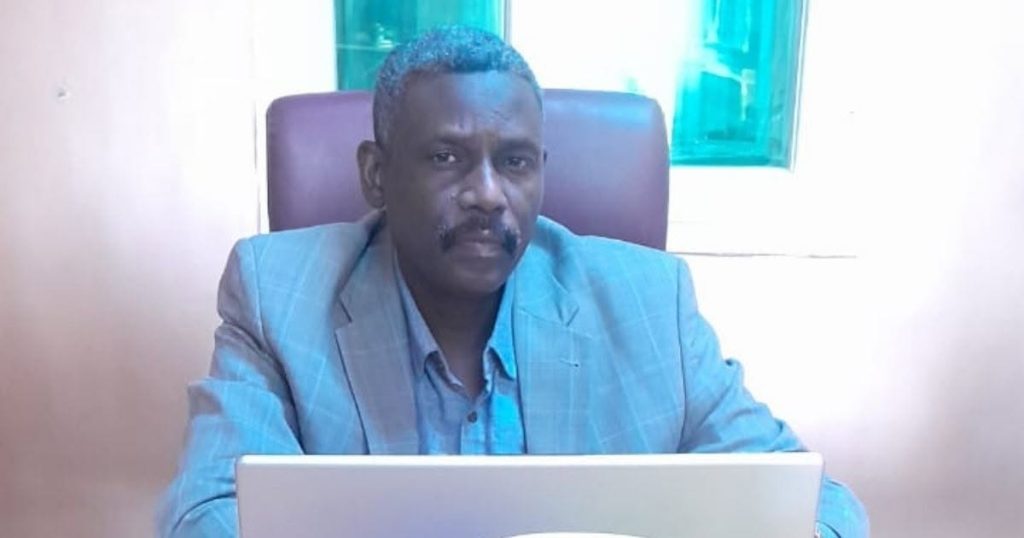
The Rector of the University of Nyala, Professor Saber Adam Hassan Abu, revealed that arrangements are underway to resume in-person classes for graduating cohorts, through temporary hosting by Al-Neelain University in Khartoum.
In a statement to Al-Tayyar, he explained that the university has also begun resuming classes for several colleges, including Medicine, Engineering, Medical Laboratory Sciences, and Nursing, in cooperation with Imam Al-Mahdi University in Kosti, White Nile State.
He noted that the main challenges facing the return to in-person education include approximately 50% of students and 30% of faculty members remaining in South Darfur State, in addition to the difficulty of providing suitable student accommodation in Khartoum.
The Rector confirmed that the University of Nyala has approximately 34,000 students and 800 faculty members and staff, describing the damage suffered by the university as “very extensive.” He added that the university “came close to losing all of its infrastructure,” while emphasizing that the educational process would continue from the capital despite the circumstances, saying: “We will continue with determination and resolve.”
He added that arrangements are underway to resume classes for the remaining colleges in the coming period until a unified campus capable of accommodating all colleges is secured. In the meantime, the remaining colleges will continue operating through online education until the necessary arrangements are completed.
The university administration has referred the matter to the Ministry of Higher Education and Scientific Research, which has pledged to work toward providing a unified site to accommodate the various colleges.
Regarding student accommodation, the Rector explained that the capacity of university dormitories presents a major challenge, noting that ongoing coordination is taking place with the National Fund for Student Welfare and relevant authorities to identify suitable alternatives.
He confirmed that once the accommodation arrangements are completed, the university will gradually resume full in-person education.
Professor Saber also revealed that a number of students from the Colleges of Medicine, Engineering, and Nursing had been subjected to harassment by the Rapid Support Forces (RSF) while traveling to attend their colleges.
He explained that the university’s plan is based on a gradual return, beginning with graduating cohorts in the first phase. He noted that faculty members are currently distributed across safe states and neighboring countries such as Uganda and South Sudan, while approximately 35% remain in South Darfur State.
The Rector called for concerted official and popular efforts to support the university’s progress and rebuild what was destroyed by the war. He expressed his appreciation to the Governor of South Darfur State and the Ministry of Higher Education and Scientific Research for their continued support.
He also noted the existence of a previous popular committee established to support the University of Nyala, which is currently being restructured to include members from outside the Darfur region, given the scale of the challenges and rehabilitation requirements.
Professor Saber expects a decision to be issued soon regarding the formation of a Board of Trustees for the university, calling for coordinated efforts to successfully navigate the rebuilding phase and restore the university to its academic strength.